Where business reality becomes research.
An industry is a world of work.
An industry brings together businesses, people, products, processes, rules, transactions and decisions that interact with one another every day.
We study those relationships because technology works better when it is built around how the work actually happens.
What is being produced, moved or sold?
Who performs, controls or depends on the work?
What actually happens every day?
What must happen, and what must not?
What proves that something happened?
Where can technology make the work better?
An industry is not merely a market we sell into. It is a body of reality we can investigate.
We enter industries for different reasons.
Sometimes we already understand part of the work through experience with the businesses, people or problems involved. Sometimes a recurring problem keeps appearing. Sometimes our technical experience makes a difficult problem worth investigating. Sometimes an industry presents a question we cannot answer without going deeper.
We may already understand part of the work through experience with the businesses, people or problems involved.
Some problems keep appearing because the way the underlying work is organised has not been properly understood.
New technology can make difficult or previously impractical work possible.
Some industries contain difficult questions worth investigating because we believe they can be understood better.
We do not enter an industry simply because it is large. We enter because there is something worth understanding, solving or building.
What makes an industry worth entering?
There must be meaningful activity happening: products moving, services being delivered, money changing hands, decisions being made and records being created.
We look for problems that affect how businesses operate, grow, control risk or serve people.
We need to be able to examine how the industry works rather than simply make assumptions about it.
Technology should have a meaningful role to play. We do not add technology simply because it exists.
There should be an opportunity to build, observe what happens and learn from the results.
An Ithoka industry is not a permanent label. It is a field of investigation.
No business operates alone.
The industries we enter often meet at their edges. A retailer depends on agriculture, manufacturing and logistics. Manufacturing depends on finance and supply networks. Financial activity depends on records created by businesses. Security and compliance can affect all of them.
The connections matter because a problem in one part of the economy can depend on what happens somewhere else.
Explore the relationships between the worlds Ithoka studies and the research, technology and systems connected to them.
Worlds we study.
Businesses that source, move, stock, process and sell everyday goods.
Manufacturing environments where production, quality, inventory and operational decisions must remain connected.
Financial operations where transactions, records, controls and reporting must remain consistent and auditable.
Business environments where credentials, transactions, records and high-stakes decisions require controlled access and auditability.
Agricultural systems where crop condition, supply origin and field decisions must be understood in context.
Health information and referral environments where people need reliable guidance through accessible channels.
Location-aware navigation environments where people need reliable movement through mapped places.
What happens when Ithoka enters an industry?
Understand what people, businesses and organisations actually do.
Investigate the problems, relationships and rules underneath that work.
Identify technologies that can genuinely address what we found.
Turn the research into systems designed around the actual work.
Let the system encounter the environment it was designed for.
Use evidence from operation to discover what worked, what did not, and what we misunderstood.
New evidence can produce new research, better systems and better ways of working.
What does this mean for a business?
When Ithoka enters an industry, the goal is not simply to produce another piece of software. We want to understand the work well enough that technology can make it more visible, more reliable, easier to control, or more effective, and then learn from what happens when that technology meets the real business.
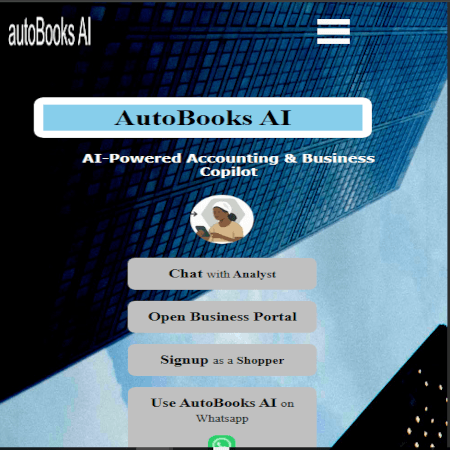
See how your operations actually work.
Find where work can be made better.
Make important rules, permissions and records more reliable.
Use evidence from operations to make better decisions.
Use what is learned to improve the system and the way the business works.
The system shows what we built. Its operation gives us evidence. That evidence tells us what to improve next.
Have a business reality worth understanding?
Bring us something in your business that you want to understand better. We start with the work itself.